Trying to Lower Your A1C and Blood Sugar? The Common Error Blocking Your Results
If you've searched for how to lower blood sugar but the numbers won't budge, the issue may be cellular. Learn how to support and lower A1C naturally with a simple daily routine.
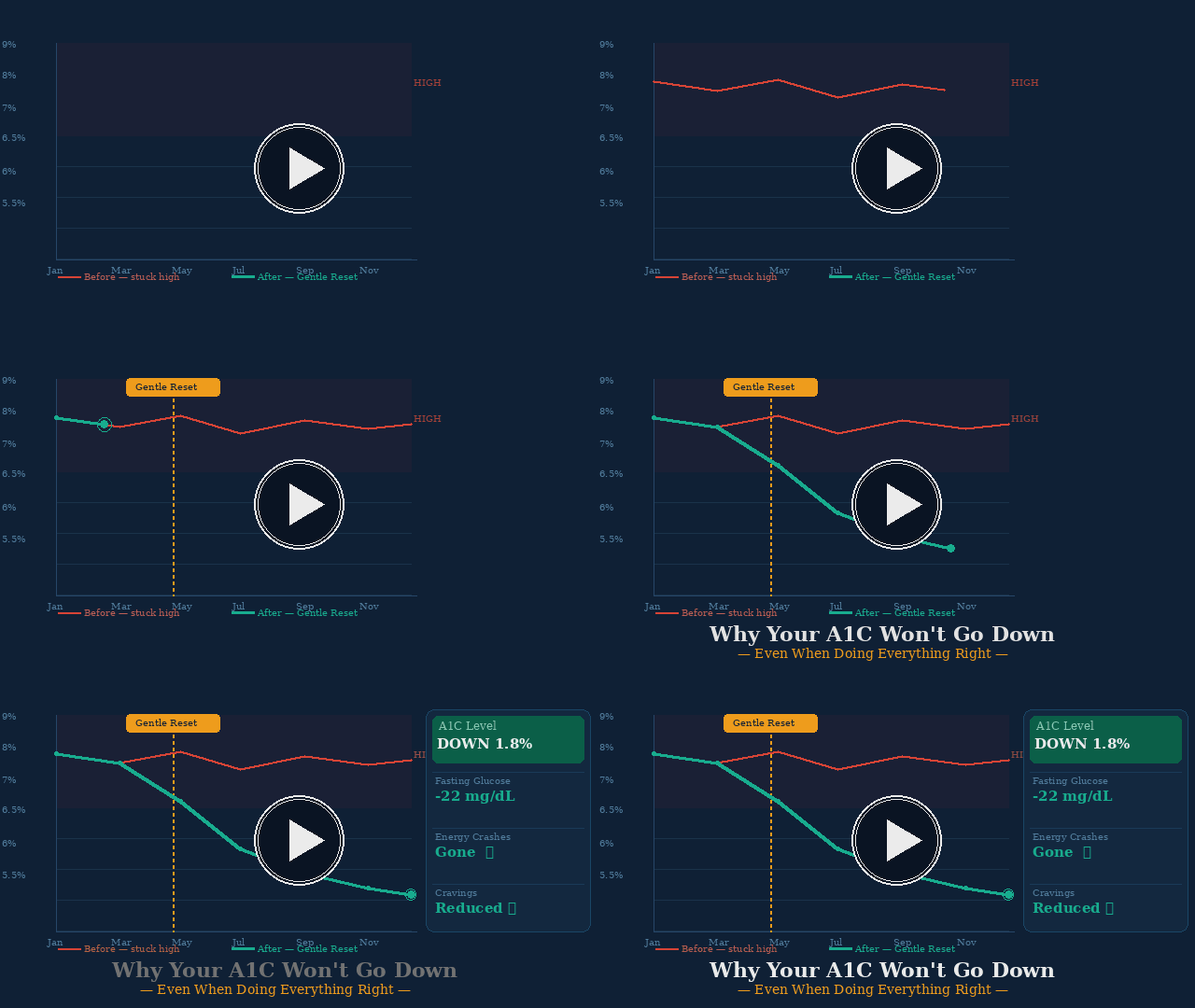 👉 Watch the video to learn how to support and balance your A1C naturally
Why Most Approaches Stall
If you've cut sugar, improved your meals, or moved more — and your numbers still won't change — it's exhausting.
Many people reach this point feeling frustrated, confused, and concerned about what comes next.
Most people struggling with high blood sugar don't "fail" because of lack of effort.
They get stuck because they were never shown what truly drives glucose regulation inside the body.
You try to do everything "right." Yet your readings barely move… or they improve briefly and rise again.
- Energy crashes that come out of nowhere
- Brain fog that makes it harder to focus
- Cravings that feel difficult to control
- Concern about long-term health
When you're searching "how to lower blood sugar" or "how to lower A1C naturally," what you really want is something your body can actually respond to.
What Most People Don't Hear About
Blood sugar isn't influenced by food alone — it's also guided by internal metabolic signals.
According to Dr. Phil, a metabolic health specialist, glucose regulation involves internal messengers — including a hormone called GLP-1.
GLP-1 helps signal insulin release… slows sugar absorption… and supports appetite and energy balance.
When this signaling becomes less responsive — often linked to stress, poor sleep, and modern habits — blood sugar can become harder to balance, even when you're doing a lot "right."
That's where this gentle glucose support method comes in — a simple morning routine designed to support healthier signaling.
Using a short daily practice, it may help your body:
- Support glucose signaling
- Support pancreatic response
- Help reduce spikes
- Support metabolic balance
Not by forcing your system — but by working with it.
Grounded in Metabolic Research
This gentle glucose support method is inspired by research on how GLP-1 influences glucose regulation and pancreatic response.
It also draws on plant-based nutrients studied for their role in:
- Glucose metabolism
- Insulin signaling
- Inflammation balance
- Metabolic support
Instead of extreme rules, this approach is designed to fit real life — which is why many people find it easier to stay consistent.
Especially if you've already tried cutting sugar, changing your diet, or exercising more — and still felt stuck.
It was refined with guidance from nutritional researchers and metabolic specialists and is now used daily by thousands of people looking for a more natural way to support blood sugar.
No extreme diets. No injections. Just a simple routine aligned with your body's biology.
👉 Watch the Gentle Glucose Support MethodIf You've Tried Everything…
If you're tired of chasing numbers…
If you're looking for a natural way to support your body…
Especially if you've been trying "how to lower A1C" or "how to balance blood sugar" and still feel stuck…
This gentle glucose support method makes sense because:
- It works with your biology
- It supports natural GLP-1 signaling
- It fits into real life
- It doesn't require extreme changes
Your body doesn't need extremes — it needs the right support and the right signal.
You just need the right signal.
Frequently Asked Questions
Diet and exercise are important, but they don't address one of the most overlooked drivers of high A1C: impaired cellular glucose absorption. Even when blood sugar levels drop temporarily, cells may not be absorbing glucose efficiently due to reduced insulin sensitivity or weakened metabolic signaling — including a gut hormone called GLP-1. Without supporting this internal signaling, A1C numbers tend to stall or rebound despite consistent lifestyle effort.
An A1C of 6.8% is in the diabetic range (above 6.5%) and does warrant attention. Many people at this level are looking for ways to bring it down naturally before or alongside medication. Supporting the body's glucose metabolism through consistent daily habits — including sleep quality, stress reduction, and metabolic hormone support such as GLP-1 signaling — may help move the needle. Always work closely with your healthcare provider to monitor progress and adjust your plan.
Lowering A1C naturally means supporting the body's internal glucose regulation without relying solely on medication. Since A1C reflects average blood sugar over roughly 3 months, meaningful changes typically appear within one to three months of consistent effort. Natural approaches include reducing glycemic load in meals, improving sleep and stress levels, and supporting metabolic hormones like GLP-1 that regulate how cells absorb and process glucose.
Blood sugar spikes after eating aren't caused by food alone. The body's insulin response, gut hormone activity (especially GLP-1), and cellular sensitivity all determine how glucose is processed after a meal. If GLP-1 signaling is blunted or insulin sensitivity is low, even moderate-carbohydrate or "healthy" meals can trigger significant spikes. Supporting this metabolic signaling pathway is often the missing piece for people who eat well but still see unpredictable glucose numbers.
Some people with type 2 diabetes or prediabetes have been able to reduce or discontinue medication under close medical supervision after achieving sustained improvements in blood sugar and A1C through lifestyle changes. This is not a decision to make alone — any change to your medication plan must be guided by your doctor. That said, supporting the body's natural metabolic mechanisms alongside prescribed treatment may contribute to meaningful progress over time.
Yes — fatigue and sugar cravings are among the most common signs of unstable blood glucose and impaired cellular absorption. When cells aren't efficiently using glucose for energy, the body signals for more — triggering cravings and causing energy crashes. Supporting steadier glucose levels through metabolic signaling (including GLP-1 activity) often helps reduce these symptoms alongside A1C improvement.
A prediabetes A1C falls between 5.7% and 6.4%, so yes — 5.9% places you in that range. While it's not yet a diabetes diagnosis, it signals that blood sugar regulation is already impaired. Without intervention, many people in this range progress to type 2 diabetes within a few years. The good news is that this window is also when natural approaches tend to be most effective. Supporting the body's metabolic signaling now may help reverse the trajectory before it becomes harder to manage.